Our flight to Hanoi from Los Angeles had a layover in Hong Kong. That was a few weeks ago when the ongoing protests were gaining momentum, but had yet to reach a breaking point—as they have this past week.
Ten weeks ago, the protests responded to a proposed bill that would have allowed Hong Kong residents to be extradited to mainland China for trial. They have since blossomed to greater demands for democratic freedoms. The protesters’ tenacity generates from the imminent fear that the city’s judiciary system and police force, the enforcers of the political and legal system, will lose their autonomy. These fears are compounded by a profound social immobility, a product of the city’s exorbitant standard of living. The protesters want to elect political figures who will address social and economic inequities.
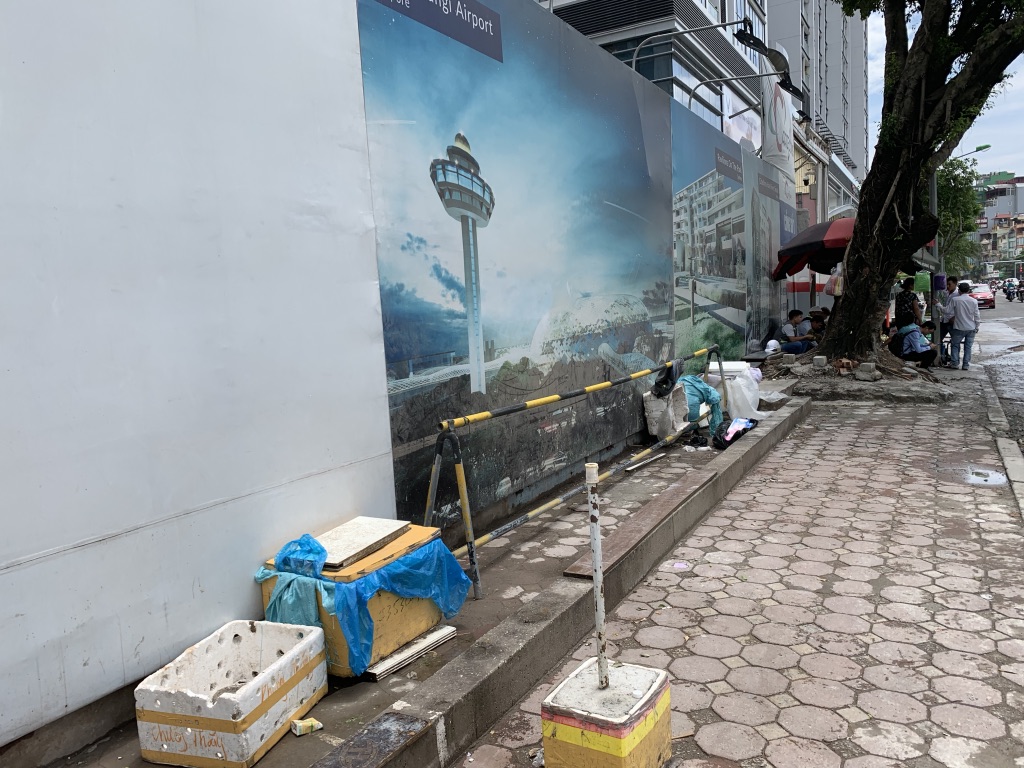
The civil disobedience did not affect our flights, as has been the case this week at the Hong Kong airport. But now in Hanoi witnessing the “phát triễn nóng” [hot development], I’m inclined to think that Hong Kong’s protests and the ensuing conflicts seem like possible outcomes for Hanoi’s unbridled urban development. The capital city that houses Ho Chi Minh’s mausoleum aspires to what Hong Kong is already known for: luxury. Whether it be high-in-the-sky condos, multi-storied department stores, or “secure” townships to keep the unwanted at bay, the construction caters towards luxury while wholly ignoring the imperatives of education, healthcare, the environment, urban design and infrastructure, green and public spaces…the list goes on. Bubbles of luxury separate those who can afford excesses and entitlements from those who cannot.
As Hong Kong’s protesters are demonstrating, capitalist development by no means goes hand-in-hand with political progress. Any government’s “invisible” hand in the spread and acceleration of capital compromises the majority’s everyday life. To what extent is such illusory growth sustainable? As the tensions mount from the inverse relationship between development and political rights, how are protests and civil disobedience being expressed? Are these articulations adequately heard? As is the case with most media coverage, when these expressions do reach media outlets, are they viewed as inconveniences to corporate bottom lines, the stock market, national “security,” and travelers’ itineraries?
#Hongkongprotests

 southeastbysoutheast.travel.blog